Wednesday, May 2, 2012

Professor Noam Chomsky: '"Free Markets?" (1997)'


Source:Santarchy- MIT Professor Noam Chomsky talking about the free market in 1997.
"This talk by Noam Chomsky was filmed at Northeastern University, Boston on Dec. 5, 1997"

Source:Santarchy

"The free market is an economic system based on supply and demand with little or no government control. It is a summary description of all voluntary exchanges that take place in a given economic environment. Free markets are characterized by a spontaneous and decentralized order of arrangements through which individuals make economic decisions. Based on its political and legal rules, a country's free market economy may range between very large or entirely illegal." 

From Investopedia 

"In economics, a free market is a system in which the prices for goods and services are self-regulated by buyers and sellers negotiating in an open market without market coercions. In a free market, the laws and forces of supply and demand are free from any intervention by a government or other authority other than those interventions which are made to prohibit market coercions. Examples of such prohibited market coercions include: economic privilege, monopolies, and artificial scarcities.[1] Proponents of the concept of free market contrast it with a regulated market in which a government intervenes in the exchange of property for any reason other than reducing market coercions.

Scholars contrast the concept of a free market with the concept of a coordinated market in fields of study such as political economy, new institutional economics, economic sociology and political science. All of these fields emphasize the importance in currently existing market systems of rule-making institutions external to the simple forces of supply and demand which create space for those forces to operate to control productive output and distribution. Although free markets are commonly associated with capitalism in contemporary usage and popular culture, free markets have also been components in some forms of market socialism.[2]

Criticism of the theoretical concept may regard realities of the difficulty of regulating systems to prevent significant market dominance, inequality of bargaining power, or information asymmetry, in order to allow markets to function more freely.

Historically, free market has also been used synonymously with other economic policies. For instance proponents of laissez-faire capitalism, may refer to it as free market capitalism because they claim it to achieve the most economic freedom." 

From Wikipedia 

"Laissez-faire is an economic theory from the 18th century that opposed any government intervention in business affairs. The driving principle behind laissez-faire, a French term that translates to "leave alone" (literally, "let you do"), is that the less the government is involved in the economy, the better off business will be, and by extension, society as a whole. Laissez-faire economics is a key part of free-market capitalism."

From Investopedia  

If your definition of a free market is: "The free market is an economic system based on supply and demand with little or no government control. It is a summary description of all voluntary exchanges that take place in a given economic environment." then you also believe in Fantasyland, perhaps Santa Clause as well, because that type of economy doesn't exist anywhere in the world. And even people who claim to believe in the free market, put at least some restrictions on whether people should be allowed to organized in labor unions and would seriously restrict labor unions, if they couldn't outlaw them. 

What the developed world has, including America, but Canada, Europe, Japan, Korea, have are private markets. A private market is where most, if not all commerce and for-profit industries, are in private hands and privately owned, but that is regulated by government and pays taxes to the government. 

You are not going to find a successful, purely communist state in the world today. Even countries that still have communist government's, that have seen rapid economic growth, the last 30 years or so, like the People's Republic China, how have private economies, private property, private ownership of the businesses. But China is obviously not a free market either. 

Wednesday, April 25, 2012

Reason Magazine: Damon Root- 'Arizona's Immigration Law Heads to the Supreme Court'


Source:Reason Magazine- welcome to liberal democracy at the U.S. Supreme Court.

"As long as there is not a direct conflict, which the federal government did not do a very good job of pointing to today, the Arizona law gets to stand under the Preemption Doctrine," says Reason's Damon Root, who was at the Supreme Court during Wednesday's oral arguments surrounding Arizona's controversial immigration law. "The federal government is saying that 'we have the power to stomp out all of the state experiments in immigration law enforcement.'"

Much like the Health Care arguments before the Court in March, Root does not see this as a good day for the Obama administration, in part due to Solicitor General Donald Verrilli's poor performance. "At one point," Root explains "Justice Sotomayor interrupted [Verrilli] and said "look I am terribly confused by what you are saying."


I don't disagree with anything that Damon Root said here. And no, I'm not a Libertarian, but Reason Magazine is. 

The constitutional problems that the Arizona immigration law have are related to civil rights, not Federal supremacy or the roles between the Federal Government and the states. 

The question is does Arizona or any other state or any jurisdiction, including the Federal Government, have the right to stop people and in this case assumed that someone is in the United States illegally, simply because of their racial or ethnic background and then have that person detained, simply because you think they look illegal, simply because of their racial or ethnic features. I think the answer to that question is obviously no. But I'm not a lawyer and I certainly don't have a vote on the U.S. Supreme Court.

Tuesday, April 24, 2012

Chris Van Hollen: 'Mitt Romney Flips Faster Than Pancakes At IHOP'

Source:U.S. Congress- U.S. Representative Chris Van Hollen (Democrat, Maryland)

"On the Martin Bashir show, Rep. Van Hollen points out how Mitt Romney was for the student loan rate doubling before he was against it." 

From Chris Van Hollen

It must be great to be able to change your mind whenever its convenient: "My position is no longer popular, so I'm going to change it." 

It's one thing to change your position, as facts and evidence changed. And just say: "Look, I was wrong, if I knew now what I didn't know then, I wouldn't of taken that position." But it's another to change your position for political convenience, which is what Mitt Romney has become an expert on: 

"Governor Romney, what's your position on abortion? Well when I'm running for U.S. Senate or Governor of Massachusetts, I'm pro choice. But when I'm running for President in a Republican Party that considers abortion murder, I'm pro life." 

You could go on to the healthcare mandate, the House Republican budget plan and others. I'll give Governor Romney credit for not going after the Religious-Right to go out of his way to bring them to his corner and come out for things like outlawing pornography, gambling and other things. Which is what Rick Santorum did, but again thats another flip fop. From 2007-08 when he tried to convince Republicans he was a Religious Conservative.

Mitt Romney's presidential campaign slogan should be: "If I need your vote and you are for it, so am I. And if I need your vote and you are against it, so am I." 

Mitt gives new meaning to the term practical leadership, because instead of trying to accomplish the politically possible, he tries to accomplish the politically popular. At least amongst people he believes he needs to vote for him. 

When Mitt is running for President in the Republican primaries, he runs as a Reagan Conservative. Which is why the Religious Right doesn't like him. And when he runs in the general election, he'll run as an Independent Republican, or Moderate Conservative to seek votes from Independent voters. 

What Mitt really should do is clone himself. Have Conservative Mitt run for Republicans, Independent Mitt to run for Independents. Or get a time machine to erase all of his positions he took in the Republican primaries, that Independents don't like.

This won't work for Mitt, he'll end up being the John Kerry of 2012, where Independent voters are trying to figure out who the real Mitt is and running out of time. And sticking with the guy they know because Mitt Romney might not even know who the real Mitt is anymore. Because he's changed his positions as often as some women changes their hair color to the point they can't remember what their natural hair color is.

Monday, April 23, 2012

Dennis Prager: 'The Welfare State and the Selfish Society'


Source:Prager U- right-wing talk show host and writer Dennis Prager.

"Does capitalism and the free market make you selfish? Dennis Prager answers this question and challenges what for many has become conventional wisdom. Capitalism teaches people to work hard. The Welfare State teaches people to want hard. Which is better?" 

Sunday, April 22, 2012

James Miller Center: President Jimmy Carter- Report To The Nation On Energy, February 2nd, 1977

Source:James Miller Center- James E. Carter (Democrat, Georgia, 39th President of the United States) talking about American energy policy in 1977.
Source:FRS FreeState 

“President Carter speaks to the American people about the importance of an energy policy that focuses on conservation of the nation’s natural resources and a new energy department. Carter also addresses his ideas to improve the economy and reduce the size of government.” 


President Carter was right to take on energy policy and creating a national energy policy that would move America off of foreign oil and move us towards energy independence. He understood that America has a surplus of natural resources and that we can and should be energy independent like Canada, Russia, Saudi Arabia, and others and we shouldn’t have to import foreign oil.

President Carter understood the energy crisis of 1973 and how that hurt the American economy, thanks to OPEC. And understood the energy crisis of the late 1970s and how that effected the American economy with higher energy prices, that contributed to our high unemployment. Because people were spending more money on their energy and as a result weren’t spending money on other products.

The problem with President Carter’s energy policy, is that it didn’t go far enough. It was almost completely focused on renewable energy resources: wind, solar, natural gas, and others. When yes, they should be part of a comprehensive energy policy. But those energy industries were so brand new and underdeveloped in the late 1970s when this speech was given and still are today that they alone can’t get America to energy independence.

America produces oil, coal, nuclear and natural gas. We have the potential to produce a lot of these and can produce them all over the country. But we simply can’t get there on nuclear power and oil drilling alone. They won’t get us to energy independence, but they are our mature energy resources right now. And have to be part of the picture.

Renewable energy, conservation, high energy standards, should and have to be part of a national energy policy for our economy, so we can produce a lot more jobs in brand new energy industries. For our environment, to make it cleaner. And for our foreign policy, to get us off of foreign oil. And so countries that don’t have our best interest at heart, will have less leverage over us in the world. And this is exactly what President Carter was pushing. But he didn’t go far enough. He should’ve included oil, coal, natural gas, and nuclear power as well.

Oil, has, coal, nuclear are already here for us, because they are already there and mature. And employ a lot of Americans in this country. And we can produce them in a way that doesn’t harm the environment through regulation and taxation.

President Cater deserves credit for focusing on energy policy and making it a centerpiece of his economic policy. And probably pushed this debate farther along than any President since. But missed an opportunity to create a comprehensive energy policy that by now could’ve moved America to energy independence and finally off of foreign oil.

Friday, April 20, 2012

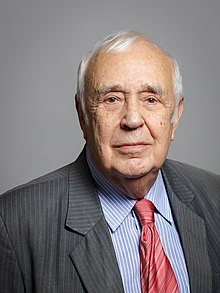
Robert Skidelsky: 'Interpreting the Great Depression: Friedrich Hayek Versus John Maynard Keynes'

Source:New Economic Thinking- British economist/politician Robert Skidelsky.

"The Inaugural Conference @ King's, Institute for New Economic Thinking, Day 1 - Dinner.

1930 and the Challenge of the Depression for Economic Thinking: Friedrich Hayek versus John Maynard Keynes." 


"Robert Skidelsky is emeritus professor of political economy at Warwick University. His three-volume biography of John Maynard Keynes (1983,1992, 2000) won five prizes and his book on the financial crisis – Keynes: The Return of the Master – was published in September 2010. He was made a member of the House of Lords in 1991 (he sits on the cross-benches) and elected a fellow of the British Academy in 1994. How Much is Enough? The Love of Money and the Case for the Good Life, co-written with his son Edward, was published in July 2012.

He is also the author of Britain in the 20th Century: A Success? (Vintage, 2014), editor of The Essential Keynes (Penguin Classics, 2015), and co-editor of Who Runs the Economy? (Palgrave, 2016) and Austerity Vs Stimulus (Palgrave, 2017).

He has recently written and filmed a series of lectures on the History and Philosophy of Economics which will be made available as an open online course in partnership with the Institute for New Economics Thinking.

His latest book is Money and Government, which will be published by Allen Lane in September 2018. He is now working on a book about automation and the future of work." 

Source:Robert Skidelsky- from his blog.

From Robert Skidelsky 

"Skidelsky has been a member of four political parties. Initially a member of the Labour Party, he left to become a founding member of the Social Democratic Party, in which he remained until it merged with the Liberal Party to become the Liberal Democrats in 1988. He objected to the merger and remained in the continuing SDP until its dissolution in 1990. On 15 July 1991 he was created a life peer as Baron Skidelsky of Tilton in the County of East Sussex[9] and in 1992 he joined the Conservative Party.[4] Around the time of the announcement of his peerage it was speculated that David Owen, a co-founder of the SDP, had lobbied then Prime Minister John Major for Skidelsky's appointment.[10] He was made an opposition spokesman in the Lords, first for Culture, then on the Treasury (1997–1999), but he was removed by William Hague, then party leader, for publicly opposing NATO's bombing of Yugoslavia in 1999.[4]

In 2001 Skidelsky left the Conservative Party for the cross benches. He was Chairman of the Social Market Foundation between 1991 and 2001.[4]

In September 2015 Skidelsky endorsed Jeremy Corbyn's campaign in the Labour Party leadership election, writing in The Guardian: "Corbyn should be praised, not castigated, for bringing to public attention these serious issues concerning the role of the state and the best ways to finance its activities. The fact that he is dismissed for doing so illustrates the dangerous complacency of today's political elites. Millions in Europe rightly feel that the current economic order fails to serve their interests. What will they do if their protests are simply ignored?" 

Source:Wikipedia- British economist/politician Robert Skidelsky.

From Wikipedia

Citizens Against Government Waste: 2012 Congressional Pig Book

Source:Citizens Against Government Waste- U.S. Senator Pat Toomey (Republican, Pennsylvania) talking about the CAGW report.
"Today, Citizens Against Government Waste (CAGW) released the 2012 Congressional Pig Book, the 21st edition of the group’s exposé of pork-barrel spending. CAGW was joined at the Phoenix Park Hotel in Northwest Washington, D.C. by Senators John McCain (R-Ariz.), Tom Coburn (R-Okla.), Jim DeMint (R-S.C.), and Pat Toomey (R-Pa.), as well as Representatives Jeff Flake (R-Ariz.), Jim Jordan (R-Ohio), Tom Price (R-Ga.), and Paul Broun (R-Ga.) for a press conference announcing the release. Also in attendance were two live pot-bellied pigs, Bubbles and Churchill, courtesy of the Pig Placement Network in New Jersey and their handler for the day, Susan Magidson.

The 2012 Congressional Pig Book is a proverbial “good news, bad news” story. The good news is that, according to CAGW’s criteria, the number and cost of earmarks have decreased dramatically since fiscal year (FY) 2010, when the last Pig Book was published. The number has dropped by 98.3 percent, from 9,129 in FY 2010 to 152 in FY 2012, the fewest since CAGW published the first Congressional Pig Book in 1991. The cost has decreased by 80 percent, from $16.5 billion in FY 2010 to $3.3 billion in FY 2012, the lowest amount since 1992.

The bad news is that the moratorium on earmarks has been breached by Congress.

Since Congress declared the 2012 appropriations bills “earmark-free,” there are no lists of which members requested the earmarks or the location and purpose of the expenditures, which is a disturbing departure from the transparency of the past several years. Therefore, there are numerous opportunities for members of Congress to contact federal agencies after the fact and request that money to be directed to a district or state for the programs that have received mini-“slush funds,” despite the requirement that the money be spent competitively."


"CAGW Releases 2012 Congressional Pig Book" 


If you are a career politician who just happens to serve in Congress, (as if there are any other types of politicians who serve in the House or Senate) your number one priority, if only priority is getting reelected. And if not reelected, you are looking to get promoted. Maybe you serve in the House and you want to show that you can get elected statewide and run for the Senate or run for governor of your state. If you are in the Senate, you obviously want to get reelected or perhaps run for governor yourself, or perhaps you are looking at running for President.

My point is (yes, there's a point here) is that Congressional pork (which is Congressional appropriations that are a waste of taxpayer dollars, designed to please particular constituents) is designed to get members of Congress (House and Senate) reelected to promoted to higher office. You get career politicians out of Congress and you make Congressional elections (especially in the House) competitive and you eliminate post of the pork in Congress and in the Federal budget. 

Not saying that most of the pork in Congress comes from the House. If anything more pork comes from the Senate, simply because individual senators who aren't even in leadership or chairman or ranking of their particular committees, have more authority than individual representatives who have the same seniority in the House. 

What I'm saying is that Congressional careerism is a big reason for the Congressional pork that comes out of the House and Senate every year. And when you represent a partisan, gerrymandered district in the House, it's much easier to get reelected in the House, than in the Senate, because you don't have to run statewide, especially in a competitive state, like Pennsylvania or Michigan. 

So my solutions to eliminating Congressional pork, or at least seriously cutting back on it, is forcing Congress to go on a serious diet and get off the meat-lovers diet that they've been on since they were first elected to the House or Senate. And if you can't eliminate Congressional earmarks, you can at the very least make them be transparent. 

Make sure that every earmark that is attached to any Congressional bill (House or Senate) has the name of the member that the earmark belongs too. And force all earmarks to be paid for. 

These two changes right here would eliminate a lot of the Congressional pork. It's one thing to waste tax dollars when no can you see you doing that. It's another to do that publicly when people, including taxpayers are watching, especially when you are up for reelection. 

Liberal Democrat

Liberal Democrat
Liberal Democracy