Saturday, July 21, 2012

David Von Pein: WFAA-TV News: JFK Assassination First Coverage

Source:David Von Pein- WFAA-TV Dallas coverage of the JFK Assassination
Source:The Daily Press

"Assassination of John F. Kennedy, mortal shooting of John F. Kennedy, the 35th president of the United States, as he rode in a motorcade in Dallas, Texas, on November 22, 1963. His accused killer was Lee Harvey Oswald, a former U.S. Marine who had embraced Marxism and defected for a time to the Soviet Union. Oswald never stood trial for murder, because, while being transferred after having been taken into custody, he was shot and killed by Jack Ruby, a distraught Dallas nightclub owner.
Encyclopedia Britannica."

From David Von Pein

"Part 1 of 3.

8-and-a-half hours of WFAA-TV's live coverage of the events surrounding President John F. Kennedy's assassination and the subsequent murder of JFK's killer, Lee Harvey Oswald, two days later.

WFAA (Channel 8) was the ABC-TV affiliate in Dallas, Texas, in 1963. A considerable amount of video footage from the ABC Television Network in New York is also included in this video series.

Part 1 begins at approximately 12:45 PM (Central Time) on Friday, November 22, 1963, which was about 15 minutes after the President of the United States, John F. Kennedy, had been shot in downtown Dallas, Texas.

Local Dallas station WFAA-TV was airing "The Julie Benell Show", a regular midday program, when WFAA's Program Director Jay Watson interrupted with a report about the shooting -- "About 10 or 15 minutes ago, a tragic thing, from all indications at this point, has happened in the city of Dallas...".

Watson, who was himself a witness to the assassination in Dealey Plaza, talks with some of the eyewitnesses to the shooting within minutes of the shots being fired, such as Bill and Gayle Newman (whom Watson repeatedly refers to as the "Nunnallys" throughout the early afternoon). Abraham Zapruder, who filmed the assassination with his home movie camera, was also interviewed live on the air by Watson."

Source:David Von Pein

I saw a documentary about the JFK assassination about three years ago. I’ve seen several documentaries about the JFK assassination before. Most of them have been conspiracy theories relating to other people being involved in this 1963 assassination of a United States President. Ranging from the Italian Mafia being involved in it, because of U.S. Attorney General Bobby Kennedy’s involvement in trying to bring down organized crime in America.

As well as the CIA and U.S. Military being involved in the JFK assassination, because they didn’t like President Kennedy’s national security policy. The most warped conspiracy theory I’ve heard so far was that Vice President Lyndon Johnson ordered this assassination, because of how badly he wanted to be President. There’s no credible evidence to any of these conspiracy theories that I’ve seen, except for the organized crime connection. And in LBJ’s case, no evidence at all, but the documentary about the JFK assassination that I saw on the History Channel, wasn’t a conspiracy theory at all and was much different.

Because it was about the media coverage of the JFK assassination, with limited commercial interruptions and about three hours long, with no outside commentary. They just showed the media coverage of the JFK assassination from 1963, up till the JFK movie from 1991. What made this media coverage more interesting was that it was the first ever of a U.S. presidential assassination that was broadcasted live on TV. So all the TV news anchors and reporters who were reporting this story, were covering something for the very first time not only in their careers, but in American history.

With no precedent to fall back on. All they really had was their knowledge of how to cover big stories and what you saw were people who were doing a very good job. Under heavy pressure and having to do it live, with no retakes and you got to see some of these people as they were actually were. How they actually react on live TV. With CBS News anchor Walter Cronkite actually choking up during a CBS Special Report reporting that President Kennedy was dead. Which was made this JFK documentary even better because of how clever and unique it was.

I liked this documentary of the JFK assassination so much that I recorded on DVD the first time I saw it. Because the preview of it looked so good and with Jack Kennedy being a political hero of mine. I expected I would want to see it again and again which I have. You even get to see things like Jack Ruby killing Lee Oswald as it happen and coverage of the 1978 U.S. House hearing on the JFK assassination and is something that anyone whose interested in this story should check out.

Friday, July 20, 2012

Associated Press: President Obama: 'There Will Be Other Days for Politics'


Source:Associated Press- President Barack H. Obama (Democrat, Illinois) talking about the shooting in Aurora, Colorado.

"President Barack Obama says the tragic movie theater shooting in Colorado that left 12 people dead is a reminder that life is fragile. He says the event "reminds us of all the ways that we are united as one American family." 

From the Associated Press

I voted for Barack Obama for President in 2008 and will probably vote for him again in 2012. There are moments when I'm even more glad than normal that he's our President, or believe there is simply no one more qualified for that job, because he always knows what's the right thing to say and what's the right tone to have. He seems to always be at his best when he's the most under pressure. He has that JFK or Bill Clinton, even Ronald Reagan quality when the heat is on (so to speak) he not just shows up, but is at the top of his game.

Thursday, July 19, 2012

Brandon Tube: 'Wendell Willkie 1940 Presidential Election'

Source:Brandon Tube- 1940 Republican Party presidential nominee Wendell Willkie.

"Wendell Willkie is speaking in this 1940 spot against Roosevelt as the Republican nomination." 

From Brandon Tube 

Before I saw this 1940 video of Wendell Willkie, I had him down as a Classical Liberal or what some people might call a Conservative today. Outside of America, at least in the rest of the developed world, Liberals are center-right, Social Democrats are center-left. But in America, Liberals are considered center-left and the mainstream media in this country has almost no use for labels like social democrat or even democratic socialist, even with Bernie Sanders in Congress. 

But after seeing this video, I think Wendell Willkie, at least based on the positions that he was taking, sounds like a Theodore Roosevelt Progressive Republican. Still to the right of Franklin Roosevelt and other Progressive Democrats of the 1930s and 40s and to the left of the Conservative Republicans, but someone who would put more limits on what the Federal Government should. 

A Roosevelt Republican would be in favor of the safety net for people who truly need it. But not for a universal, cradle to grave welfare state, that would replace the private employment benefits system that so many American workers rely on. And would want that safety net there not just to assist people in need financially, but to help them back on their feet through education and work requirements, and time limits.

Wednesday, July 18, 2012

Associated Press: Karen Sloan: 'Liberal Alliance Beat Islamists in Libya Vote'


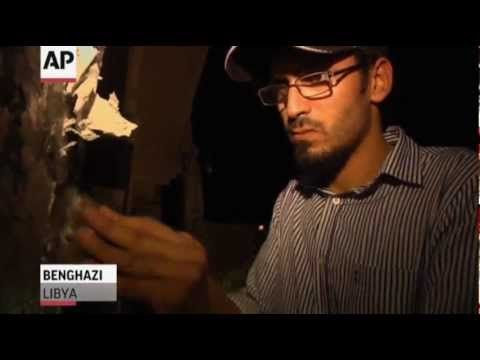
Source:Associated Press- interviewing a Libyan about their elections.

"Results from Libya's first national election after the ouster of Moammar Gadhafi put a liberal alliance ahead of Islamists, but both sides will woo independents to form a government." 

From the Associated Press

Anytime there is any sign of freedom and democracy breaking out anywhere in the Middle East and Saharan Africa, that's a good sign. This is a region that's been dominated by military dictators, Islamists, and monarchs, for most of its history. And what we might be seeing in Libya today is a sign that major coalition in that country wants to join the rest of the western developed world and not just taste freedom and democracy, but be able to live with it.

Tuesday, July 17, 2012

Brookings Institution: Robert Greenstein: 'Agreeing to a Budget Deal'


Source:Brookings Institution- Robert Greenstein is the head of the Progressive Washington think tank the Center On Budget & Policy Priorities.

"Robert Greenstein, Center on Budget and Policy Priorities: The possibility that legislative inaction could lead the nation's economy back into a recession next year, could be the impetus to get both sides to agree to some sort of deal.

On July 16, 2012, the Budgeting for National Priorities project at Brookings hosted Senator Patty Murray (D-Wash.), member of the Senate Budget Committee, former chair of the bipartisan Joint Select Committee on Deficit Reduction and a member of Senate Democratic leadership, for a conversation on the upcoming fiscal cliff, how she views the path to a balanced and bipartisan approach to avoiding it, and what steps she believes can be taken on the expiring Bush tax cuts and the scheduled sequestration. Following Senator Murray's keynote address, a panel of Brookings experts reflected on the current budget situation and prospects for a "grand bargain" to rein in the deficit and spur economic growth." 


The reason why we have a so-called fiscal cliff and sequester headed to the American economy and U.S. Government early next year, is because House Republicans wouldn't agree to any new revenue, including even cutting expensive tax loopholes, that only benefit investors and businesses,  in these deficit reduction talks. 

House Republicans idea of new revenue is for more economic growth. Their idea for more economic growth is cut more taxes and regulations on investors and businesses, without paying for them, saying that those cuts would lead to new economic growth and would pay for themselves. Which is what's known as supply-side-economics, also known as borrow and spend economics. 

Monday, July 16, 2012

Brookings Institution: Benjamin Wittes- Interviewing Ron Haskins: 'The Next President Needs to Focus on the Federal Budget'


Source:Brookings Institution- fellow Ron Haskins.

"The federal budget crisis is a key issue in the upcoming presidential election, with both parties unable to compromise thus far on government spending and tax reform. Ron Haskins and Campaign 2012 Project Director Benjamin Wittes discuss what the next president must do to address the nation's budget crisis during his term." 

From the Brookings Institution

I agree with Ron Haskins about the problem, as well as the size of the problem that the U.S. Government has and will have fiscally now and going forward. But I believe the Federal Government has simply taken on too much responsibility and doing things that it simply shouldn't be doing and not just as it relates to social policy and defense. And the revenue problem has to do with tax policy and the tax code which has things like corporate welfare in it and other wasteful tax loopholes. As well as too many people in poverty in America and an unemployment rate at around 8% doesn't help either. 

So for America to get it's fiscal house in order: 

the states need to take on more responsibility as it relates to social welfare and I even believe Social Security, Medicare, and Medicaid. And everyone whose on public assistance, should be working and going to school and get the childcare that they need while they're doing those things. 

The rest of the developed world needs to defend itself, instead of relying on America taxpayers to finance their national defense. 

And we need a tax code that encourages success and growth, that eliminates most of the loopholes on everyone, with low rates for everyone based on ability to pay taxes.

Sunday, July 15, 2012

Focus on The Family: Dr. James Dobson-Ted Bundy 1989 Interview

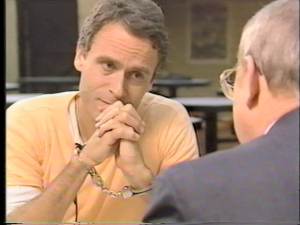
Source:Confessions of a Bundy Phile- convicted serial murderer and rapist Theodore R. Bundy, being interviewed by Dr. James Dobson from Focus on The Family, days before he was executed in January, in 1989.

Source:The Daily Press

"I’m involved in an abusive relationship with a dead man. Metaphorically-speaking, of course. I am constantly thinking about, imagining, and reading about a violent serial killer. His ice blue eyes and wavy brown hair call forth feelings of both compassion and revulsion. I am both drawn to and repelled from this handsome charmer, moonlighting as a bloodthirsty necrophile. Ambivalence lingers as I contemplate the dirty deeds of Theodore Robert Bundy, even twenty-eight years since his execution in Florida’s electric chair at age 42.

Bundy Smile.jpg
What a smile!
As if we were lovers, my thoughts often turn to him as I imagine the things we share in common. We both grew up in the Methodist church, were involved in scouting activities, and we were withdrawn and shy in high school. Despite being raised on the opposite sides of the country (he in Washington state and me in North Carolina), I’ve always felt a connection to Ted’s family upbringing and working class family. His mother clearly loved him, as did mine, and his siblings looked up to him."

From Bundy Phile 

"Ted Bundy Interview"

Source:Focus On The Family- serial murderer Ted Bundy, being interviewed by Dr. James Dobson in 1989.

From Focus On The Family 
Source:Focus On The Family- Serial murderer and rapist Ted Bundy in 1989 

It wasn’t until the last few hours, days, weeks, months perhaps, that Ted Bundy finally admitted to the murders that he committed over a 3-4 years period in the mid and late 1970s. Because he knew what was coming his way and was scared for his life. He knew he was about to pay the ultimate price for the murders of all of these women and even offered to help law enforcement. And give them new supposed evidence of other murders that he committed. Ted Bundy and Henry Lucas are different serial murderers in this sense, well there are several reasons.

Ted Bundy being very intelligent and fairly well-educated and Henry Lucas not intelligent at all. But another reason that makes them different, was that Lucas at least had enough character to confess to the murders that he committed. And went even farther than that and admitted to committing murders that he couldn’t of possibly had committed. Having been somewhere else when those murders were committed to use as an example. Ted fought for his life as long as he possibly could, even representing himself in court during his murder trials. And only finally admitted to committing the murders that he did, when he knew he was out of hope of saving his life, when he was out of appeals.

That’s one of the reasons why he did these interviews with Dr. James Dobson one of the most influential leaders of the Religious-Right in America. He was trying to get Dr. Dobson to feel some feeling for what he did, even try bring him on his side, perhaps in hope of getting Dr. Dobson to perhaps help him out. And maybe get his life spared. Dr. Dobson was too smart to fall for this, but this was Ted’s hope and perhaps get Dr. Dobson’s followers behind him as well. And even take it to the point of trying to put some responsibility on his viewing of pornography for some of his murders. And even taking it to the point of blaming his drinking of alcohol on these murders as well.

Well again Ted was a very intelligent man and understood American politics well enough to know that pornography and alcohol were two of the biggest targets among the Religious-Right in America. All Ted Bundy was doing in these interviews with Dr. Dobson, was trying to save his life. Perhaps to get Dr. Dobson to do something for him That’s why he finally admitted to the murders of twenty plus women or so in the mid and late 1970s. Because he knew the gig was up and he was out of bullets he was headed for being executed and was scared to die and wanted someone to save his life.

Liberal Democrat

Liberal Democrat
Liberal Democracy