Tuesday, October 9, 2012

ABC News: Nightline- Bill Weir: 'Melrose Place Cast Reunion'


Source:ABC News- the cast of Fox's Melrose Place.

Source:The Daily Press

"Amanda, Kimberly and Billy, the stars of the hit '90s TV drama, discuss their favorite moments."

From ABC News 

I only caught the last couple seasons of Melrose Place, because at first I thought the writing was kinda cheesy. And I’m not a big fan of soap operas to begin with, but I was flipping around one Monday night, in I believe 1997, looking for something to watch before Monday Night Football. Which at that point I watched every Monday night and I caught a little of Melrose Place and I figured what the hell, I would watch a little of this before the game.

And I couldn’t stop laughing, it was a very funny show with people constantly screwing over other people and doing it in such a casual way and the writing of it was actually pretty good.

I’m not a soap opera expert obviously, but I think a good soap opera has all the selfishness and people screwing others with very little fear about the consequences for themselves or the people they are screwing. As well as the crazy lives that only people in Hollywood could live and write into a script.

But a good soap opera has great writing, very funny writing and very funny people in it. Which is why I’m actually a late, but definite fan of General Hospital, because that show essentially has a cast for comedians or comedic actors. Who are also great actors and combine both roles very well. People who improvise and with writers who give them great lines.

Monday, October 8, 2012

ABC News: ‘Lee Harvey Oswald Has Been Shot (1963)’

Source:The Guardian- the day that Lee Harvey Oswald was shot by Jack Ruby in Dallas, in 1963.

Source:The Daily Press

“James R Leavelle, the detective who was handcuffed to Lee Harvey Oswald when the killer of John F Kennedy was in turn shot dead by Jack Ruby, has died. He was 99.

Lee Harvey Oswald is shot by Jack Ruby in a corridor of Dallas police headquarters.
JFK files reveal FBI warning on Oswald and Soviets’ missile fears
Read more
Leavelle’s daughter, Karla Leavelle, confirmed her father’s death to the New York Times.

Kennedy was shot dead on 22 November 1963, as he passed through Dallas.

Reporting for the Guardian, Alistair Cooke wrote: “The motorcade was going along slowly but smoothly when three muffled shots, which the crowd first mistook for fireworks, cracked through the cheers. One hit the shoulder blade and the wrist of Governor [John] Connally [of Texas] who was taken with the president to the hospital, where his condition is serious.

“The other brought blood trickling from the temple of the sitting president. His right arm flopped from a high wave of greeting and he collapsed into the arms of Mrs Kennedy, who fell unharmed. She was heard to cry ‘Oh no’ and sat there all the way cradling his head in her lap.”

Kennedy was declared dead at Parkland Hospital.”

From The Guardian 

“LEE HARVEY OSWALD HAS BEEN SHOT! (WFAA-TV COVERAGE)”
Source:David Von Pein- WFFA-TV News in Dallas, bringing ABC News’s coverage of Lee Harvey Oswald being transferred from Dallas city jail, to county jail in 1963.


A crazy month November, 1963: First the President of the United States, Jack Kennedy is assassinated, the National Football League suspends its games the following week, and then the man who assassinated President Kennedy, is killed himself.

November, 1963 sort of looked like the world was coming undone and perhaps the last time that president’s were allowed to be that open and vulnerable in public. And that security was even tightened for people suspected of killing high-profile people whether they are politicians, or other celebrities.

Great books and documentaries have been made about these stories and the Federal Government thought they figured out how to deal with people who are so intent on assassinating politicians. But they let someone slip through in 1981, when John Hinkley was almost successful in murdering President Reagan, when the President was leaving a hotel at the Mayflower in Washington. All of these events have made the American presidency less public and more closed to the American people.

A lot of people, columnists like George Will and others say and believe that the 1963 JFK Assassination was the end of the 1950s. And that assassination brought in the radicalization of the 1960s. And brought in a fairly violent decade. I and others would argue that a lot of that radicalism was necessary at least as it had to do the with civil rights movement and then later the anti-Vietnam War movement.

A lot of people were simply murdered in the 1960s that no one except for perhaps the haters of those murder victims see as positive things, like President Kennedy, Dr. Martin L. King and later Senator Robert F. Kennedy. 

Sunday, October 7, 2012

Associated Press: 'Raw: Voters Go to the Polls in Venezuela'


Source:Associated Press- I guess you could call this democracy in action in Venezuela.

"Pres. Hugo Chavez's crusade to transform Venezuela into a socialist state is being put to the stiffest electoral test of his nearly 14 years in power. Voters started lining up hours before dawn to cast their ballots in the presidential election."

From the Associated Press

Chavez socialism may be headed out of power in Venezuela and they become a real democratic republic, With power less centralized.

Friday, October 5, 2012

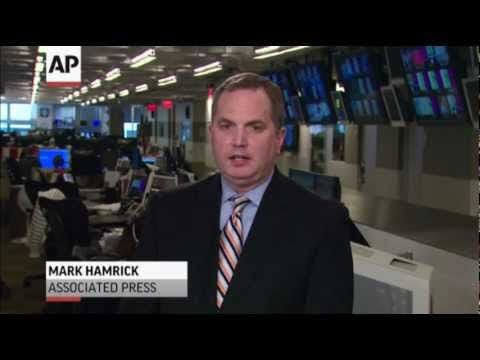
Associated Press: Mark Hamrick: 'US Jobless Rate Falls to 7.8 Pct., 44-month Low'


Source:Associated Press- Mark Hamrick with this report.

"The U.S. unemployment rate fell to 7.8 percent last month, dropping below 8 percent for the first time in nearly four years." 

From the Associated Press

When you are running for reelection as President of the United States, whether the economy is solid, or struggling (and in this case struggling) it's the trends in the economy that you need to be looking at. As well as who gets better ratings on the economy according to the voters: you or your opponent. 

You would think in a normal election, 2012 would be similar to let's say 1992 for the Democrats or 1980 for the Republicans, where the opposition party looks not only to win back The White House, but do it in a blowout and win a landslide in Congress as well. But the fact is Republican nominee Mitt Romney is still losing the polls both in the popular vote and in the Electoral College as well. And Senate Democrats seemed poised to at least hold the Senate in 2012 and pick up seats in the House. Why? Because the economy has been growing steadily in 2012 both in growth at 2% and jobs created as at around 200,000 a month. 

President Obama gets better ratings on the economy than Governor Romney, according to the voters. So if you are the Obama Campaign right now, the trend lines look good for you as far as reelection.

Tuesday, October 2, 2012

CSPAN: 1992 Presidential Debate: George H.W. Bush, Bill Clinton, Ross Perot

Source:CSPAN- President George H.W. Bush (Republican, Texas) 41st President of the United States.
"The presidential candidates for the 1992 election debated each other in the the second of three scheduled presidential debates. The participants were President George Bush, Governor Bill Clinton, and Ross Perot. They answered questions from the audience that regarded their campaigns and their policy preferences, which mostly focused on economic issues. The audience consisted of 209 undecided voters from the Richmond, VA area."

Source:MOX News

The 1992 townhall presidential debate was a history making presidential debate for a few reasons: 

The first one that was in a townhall format, where the contenders were on stage, but not stuck behind a podium. They could walk around and actually get close to the audience. And that was another thing the moderator was more of a referee than an interviewer, there to make sure that the contenders didn't go over time and try to keep them from dodging questions and even asking followups. As well as the audience being the interviewers. The debate was sort of like an afternoon talk show like Geraldo, Oprah, or, Donahue, or something.

And you had three contenders: President Bush, Governor Bill Clinton, and businessman Ross Perot. A Republican, Democrat and Independent. Ross Perot was not buried at 1% or something, he was polling at around 20%, with none of the three contenders polling at 50% and I believe only one contender polling at over 40%.

America was just starting to recover from the recession of the early 1990s, with high unemployment, interest and inflation rates. Not crazy about Republicans who had the White House for twelve years, but not in love with Democrats and sure they should have Congress and the White House. Which was Ross Perot's opportunity to get into the presidential election. 

Bill Clinton already had the lead in this race going in, but this is the debate I believe, where he sold the deal. Where he was able to convince enough voters, that he was ready and up for the job and was able to layout a vision of what change would mean under him. 

It was also the debate where Ross Perot came off as likable and competent and not crazy. But I don't think enough people knew enough about him to give him the presidency. This was also President Bush's last opportunity to tell people why he should give another opportunity to be reelected.

But President Bush blew it, because he wasn't able to connect with people and once again looked out- of-touch and I believe failed to layout, how his second term would be different from his first term. How would things get better in a second Bush Administration. He made his campaign almost completely about foreign policy, his success's in foreign policy, when the country was just went through a recession and just starting to recover from it.

Monday, October 1, 2012

Samuel Wilson: Jimmy Carter vs Gerald Ford Presidential Debate (October 22, 1976)

Source:Samuel Wilson- Governor James E. Carter (Democrat, Georgia) debating President Gerald R. Ford (Republican, Michigan) for the presidency in 1976.

"1976 Jimmy Carter and Gerald Ford Presidential Debate #3 Oct 22" 


I don't think you can say that this presidential debate was a blowout either way. Jimmy Carter and Gerald Ford I believe were both very sharp (for the most part) and showed they were in command of the issues during this debate. 

To use a sports analogy: imagine a heavyweight championship fight where it's even for the 1st 11 rounds and then the champion makes a big mistake, a self-inflicted wound, lets his guard down for a second and get clobbered for that. That's what happened when he was asked about Eastern Europe and the non-Russian Slavic states over there like Poland, where he basically said that there would be no Soviet control on Eastern Europe during a Ford Administration. When the fact is and President Ford knew this, that Eastern Europe west of Russia, were essentially satellite states of the Soviet Union. Not Russian republics, but they were heavily dependent on Russia for their survival, like Poland and Czechoslovakia. 

Sunday, September 30, 2012

Chicago City Desk: Minister Malcolm X (1963)


Source: PASMA SOBUKWE BRANCH- Nation of Islam Minister Malcolm X in 1963.

Source:The Daily Press

“Malcolm X Interview in Chicago City Desk March 17, 1963” 


“City Desk,” WMAQ-Ch. 5’s local newsmaker interview show launched 57 years ago and folded into the NBC-owned station’s Sunday-morning news program in 1996, goes away completely after this weekend.

The final edition of “City Desk” is set for the 9:30 a.m. half hour on Sunday. Hosted by Mary Ann Ahern and Carol Marin, it will be a retrospective of the program’s run, which featured such panelists as John Chancellor, Len O’Connor, Jim Ruddle, John Dreiske and Dick Kay.”  

From the Chicago Tribune

"March 1963, , Malcolm X on City Desk. Classic Malcolm at a time when he was a key Minister of the Nation of Islam. This is some time before he split with the Nation of Islam." 

Source:Floyd Webb- Nation of Islam Minister Malcolm X in 1963.

From Floyd Webb

This was an interesting interview, because a group of Chicago and national journalists, who were interviewing Malcolm X, because Malcolm X a clear revolutionary leader for African-Americans, calling for their independence from public assistance and America as a whole. That Africans in America should no longer tolerate bigotry, poverty and anything else that’s holding down Africans in America. That they should no longer tolerate these conditions and that they should stand up and fight back against the establishment that they saw as the problem that was holding them down.

Minister Malcolm was also arguing that African-Americans need to grab their constitutional rights and no longer taken them for granted and expect other Americans to enforce them for them, because in the early 1960s, African-Americans, weren’t getting their constitutional rights enforced equally as Caucasian-Americans.

Here Malcolm X was being interviewed by clear establishment figures, people from the so-called mainstream media, from Chicago, as well as NBC News in this interview. So you had a rebel being interviewed by establishment figures in this interview.

I love Minister Malcolm’s point about the names and the turn Negro with African slaves being given European and in most cases Anglo-Saxon names. And not just being kidnapped and taken from their homes in Africa, but also getting their culture, history and even their names being stripped from them.

Africans still live in America as full-blooded Africans, but having to carry names like Joe Smith and Tom Johnson, even though their family originally had a Bantu, or Zulu first and last name. Depending on what part of Africa that they came from and their ethnic background. I just don’t think these men were prepared to question someone with the intelligence and knowledge of history that Malcolm X was. 

Liberal Democrat

Liberal Democrat
Liberal Democracy